Why Black & Grey Realism Wins on Large-Scale Tattoos
Black & grey realism is where technical tattooing and fine-art fundamentals collide—especially on big placements like full sleeves, upper arms, and calves. In the Las Vegas tattoo scene, the best large-scale realism isn’t just “detailed.” It’s controlled value structure (lights to darks), accurate anatomy, and composition that reads from across the room while still rewarding close-up inspection. Portrait realism raises the bar even higher: if proportions, edge control, and skin texture aren’t exact, the viewer feels it immediately.
What Separates Elite Realism: Value, Edge Control, and Skin Behavior
High-end realism tattoos are built on value planning—clean, intentional transitions from soft grey washes to deep blacks that anchor the image. The artist’s edge control matters just as much: sharp edges pull focus to the eyes or focal features, while softened edges create depth and atmosphere. Finally, great realism respects skin behavior—how contrast heals, how midtones settle, and how to avoid “flat” portraits by preserving highlights and layering gradients instead of overworking a single pass.
Portfolio Breakdown: Las Vegas Realism & Portrait Examples (Black & Grey Focus)
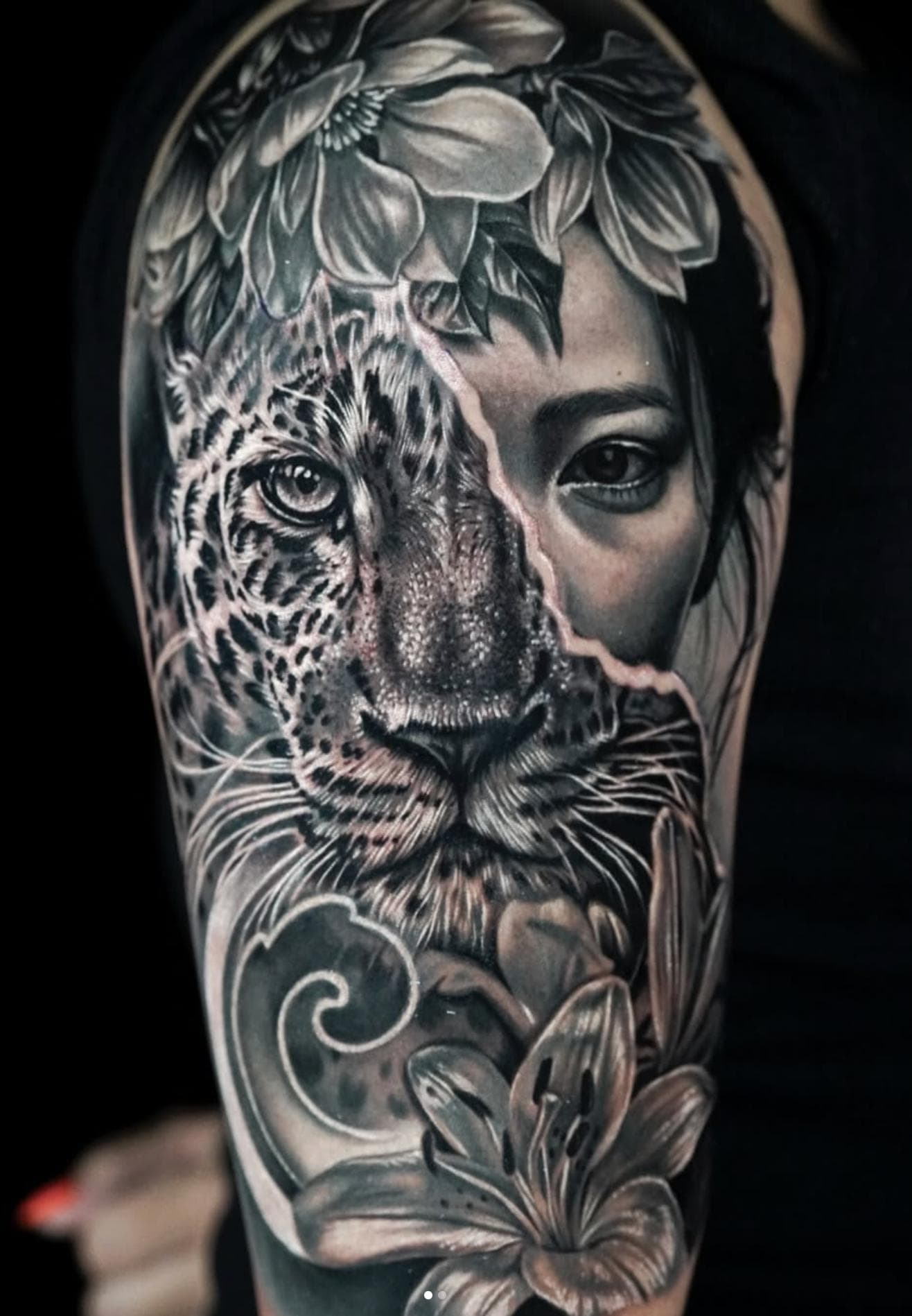
Daneris: Realistic Leopard and Woman Upper Arm Tattoo (Portrait Fusion + Wildlife)
Daneris’ “Realistic Leopard and Woman Upper Arm Tattoo” is a strong example of large-scale black and grey realism used to merge two demanding subjects: a woman’s face and a leopard, framed by flowers on the upper arm. This kind of concept only works when the artist controls contrast and transitions so the face remains readable while the leopard’s patterning doesn’t overpower it. The floral elements help shape the composition, creating natural breaks that keep the realism from becoming a single heavy block of grey.
EJ: Black & Grey Portraits That Rely on Precision
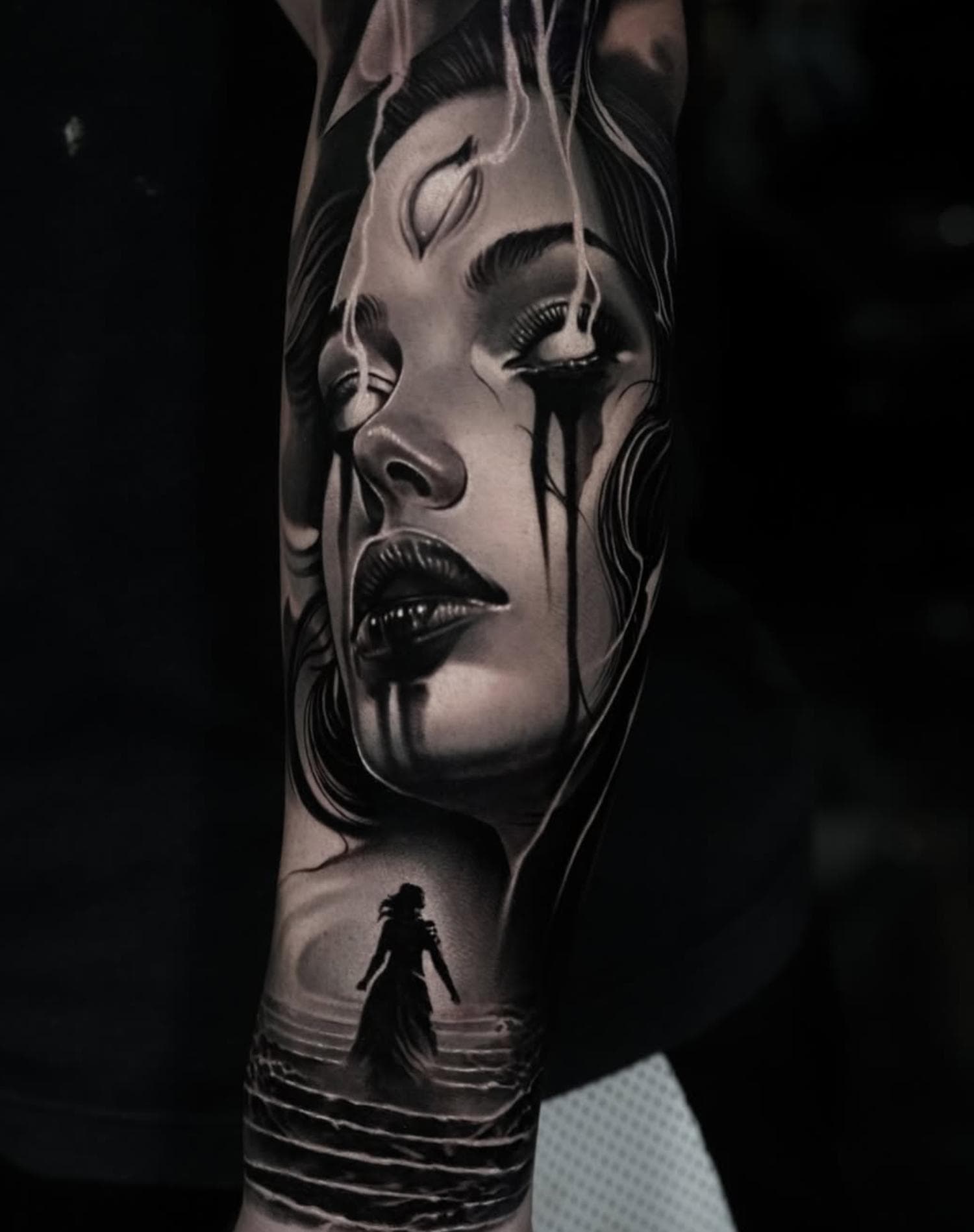
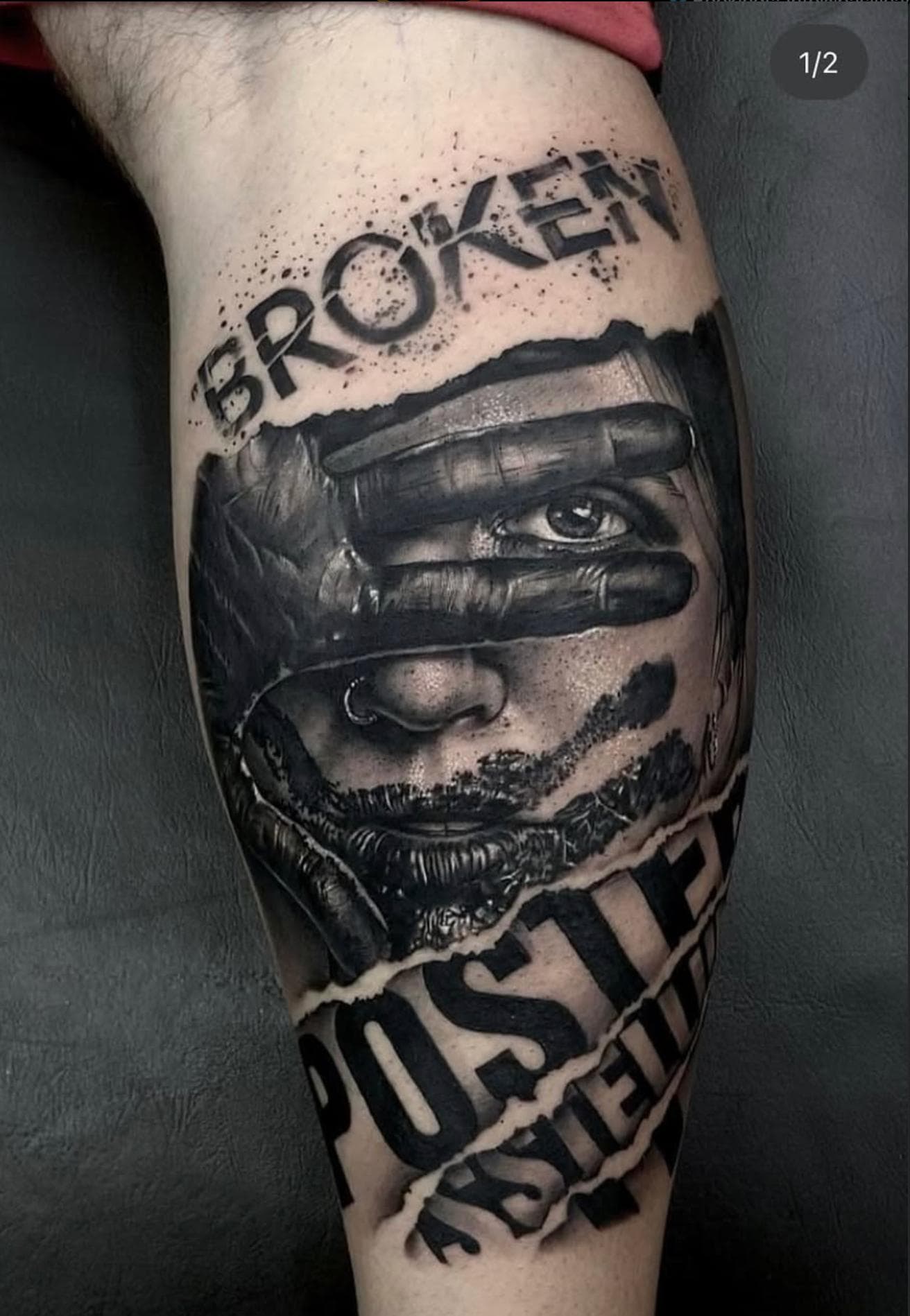
Portrait realism lives or dies on proportions and value mapping. EJ’s “Black and Grey Realistic Portrait Calf Tattoo” combines a detailed portrait with a rose on the calf—an effective pairing because the rose can carry deeper blacks and texture while the portrait stays smooth and dimensional. EJ’s “Realistic Portrait Forearm Tattoo with Black and Grey Shading” highlights why forearms are popular for realism: the flatter plane supports clean gradients, and the elongated format helps maintain facial structure without distortion.
EJ: Large-Scale Composition in a Full Sleeve
For buyers who want a true statement piece, EJ’s “Realistic Patriotic Eagle and Skull Arm Sleeve Tattoo” shows how realism scales up when you commit to a full sleeve. A realistic eagle and skull with patriotic elements requires more than detail—it requires hierarchy. The sleeve has to read in layers: major focal forms first (eagle/skull), then supporting textures and elements (stars/flag motifs), all balanced with enough open skin or softer transitions so it doesn’t heal into a dark, crowded mass.
How to Plan a Large Black & Grey Realism Tattoo (Sleeves, Upper Arms, Calves)
Choose Placement That Supports Realism
Large-scale realism works best where the artist can build smooth gradients and preserve facial proportions. Upper arms are ideal for portrait-and-subject combinations (like Daneris’ woman-and-leopard with flowers) because the area offers enough width for a clean focal point. Forearms are great for single portraits when you want daily visibility and a strong vertical flow. Calves provide a tall canvas that can hold a portrait plus a secondary element—like EJ’s calf portrait with a rose—without compressing features.
Estimate Sessions Based on Size, Contrast, and Detail
High-end black & grey realism is typically built in stages: line/structure (sometimes minimal), then layered shading, then contrast and refinement. As the piece gets larger—especially sleeves—you’re paying for time spent achieving smooth transitions and controlled blacks, not just “more ink.” Expect multiple sessions for any large portrait realism and plan for breaks so the artist can assess healed values before final contrast is locked in.
Bring the Right References (and Trust the Artist’s Value Plan)
If you’re buying a large-scale realism tattoo in Las Vegas, show references that match the mood you want: high contrast vs. softer cinematic shading, clean focal lighting vs. dramatic shadows. A top realism artist will often simplify your reference into a tattoo-friendly value map—protecting highlights, controlling midtones, and placing the darkest blacks strategically so the portrait stays legible for years.
Consultation Checklist for Buyers Who Want Museum-Level Realism
Before you book, be ready to discuss: (1) exact placement and how it wraps with your anatomy, (2) scale—how large the face or focal subject needs to be to avoid “compressed” features, (3) contrast preferences (bold blacks vs. soft grey), and (4) timeline for multiple sessions. For sleeves, ask about overall composition first, then detail. The best results come when the artist designs the full flow from shoulder to wrist (or top to bottom of the area), rather than building disconnected patches.
Book a Las Vegas Black & Grey Realism Consultation
If you’re ready to invest in a large-scale black & grey realism tattoo—especially portraits or sleeves—book a consultation to map out placement, scale, and session planning. Bring your reference ideas, be open to value and composition adjustments, and let’s design a piece that reads powerfully from a distance and holds up beautifully up close.