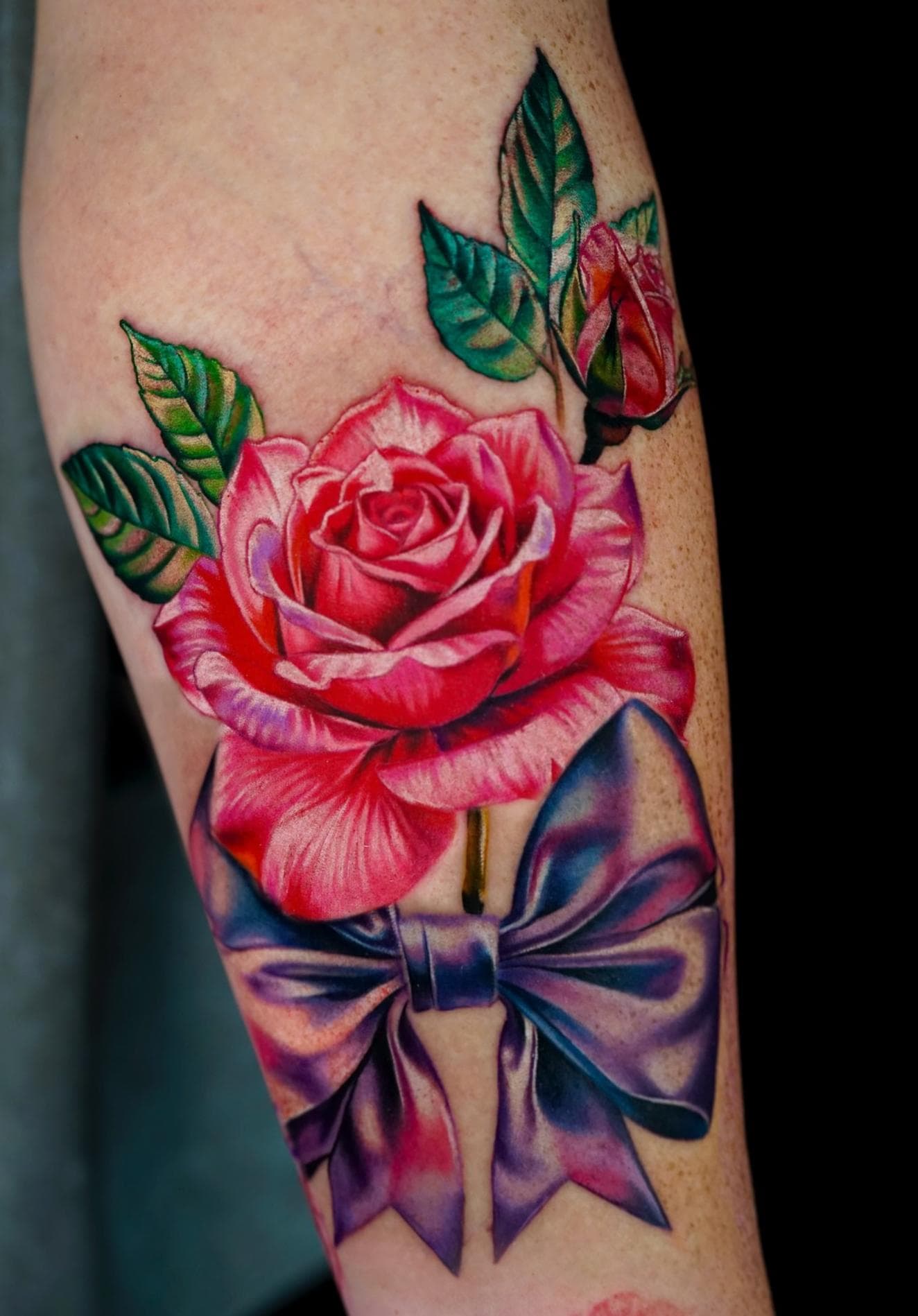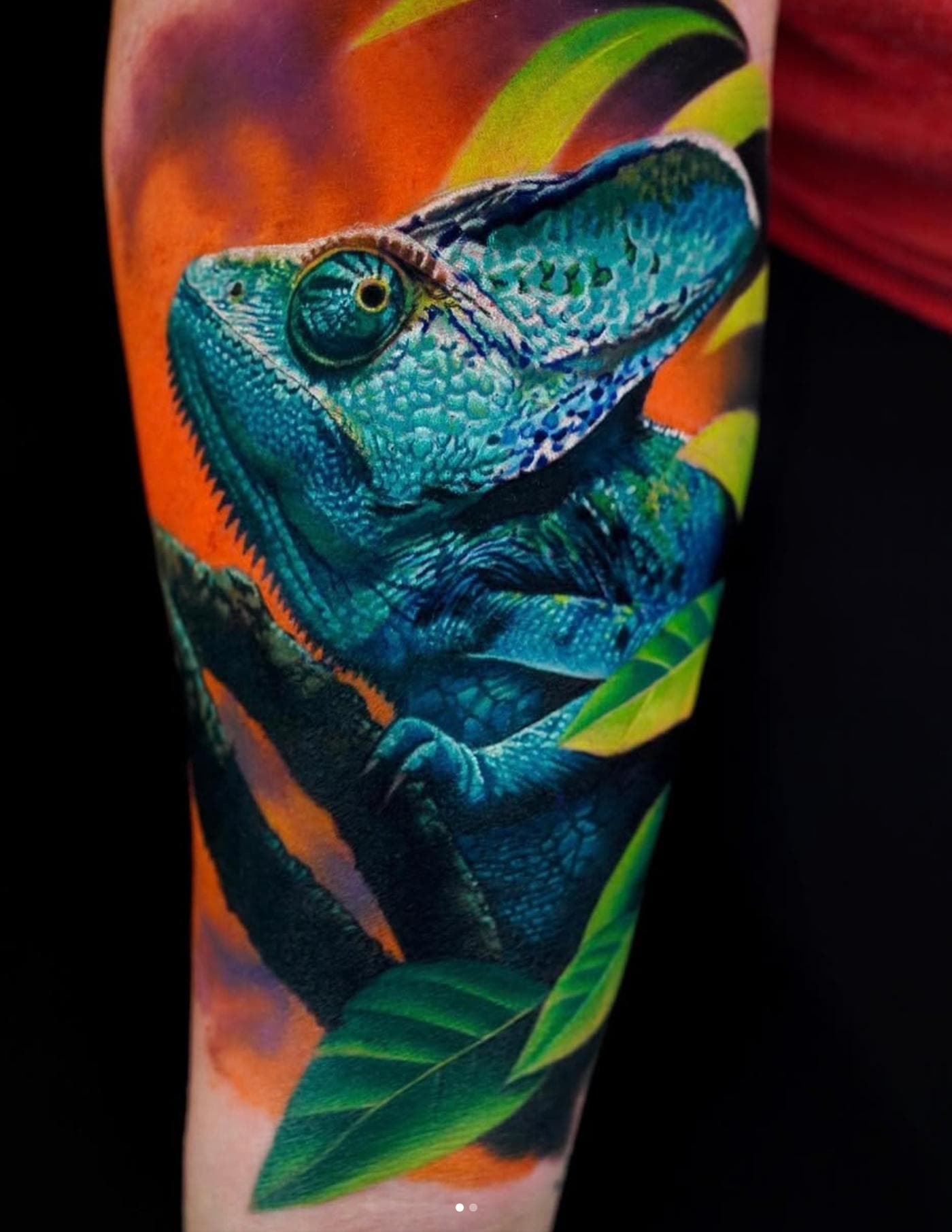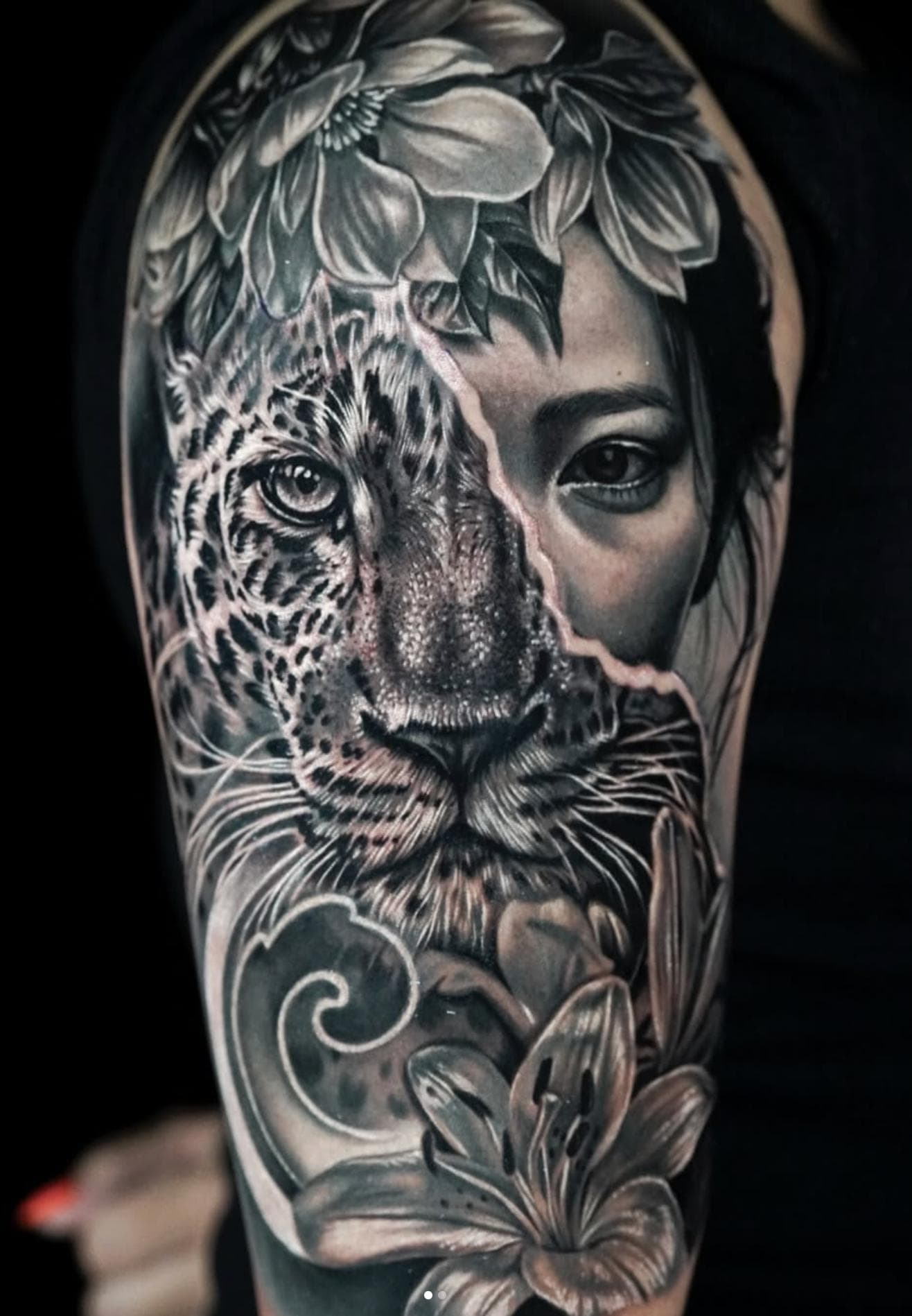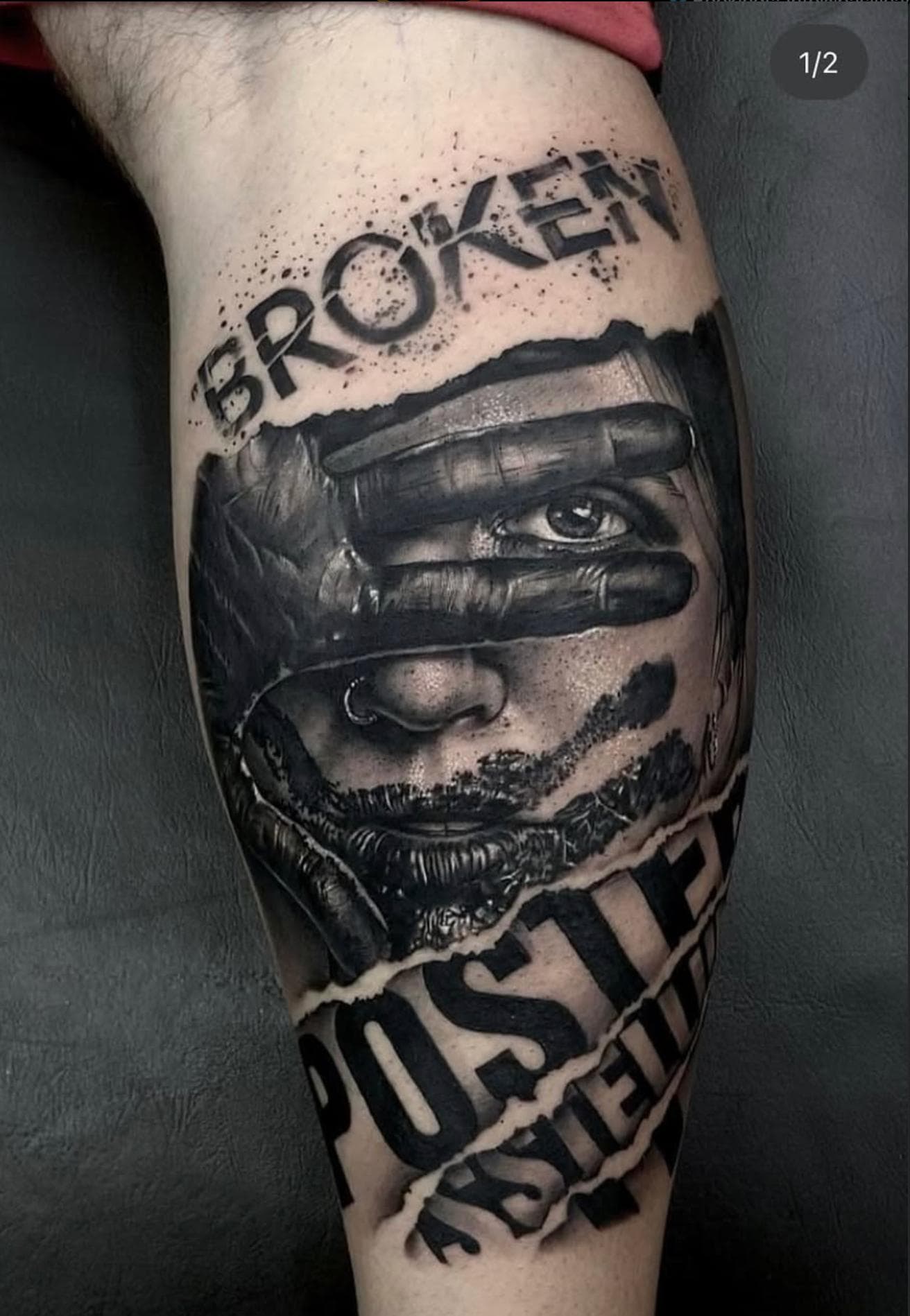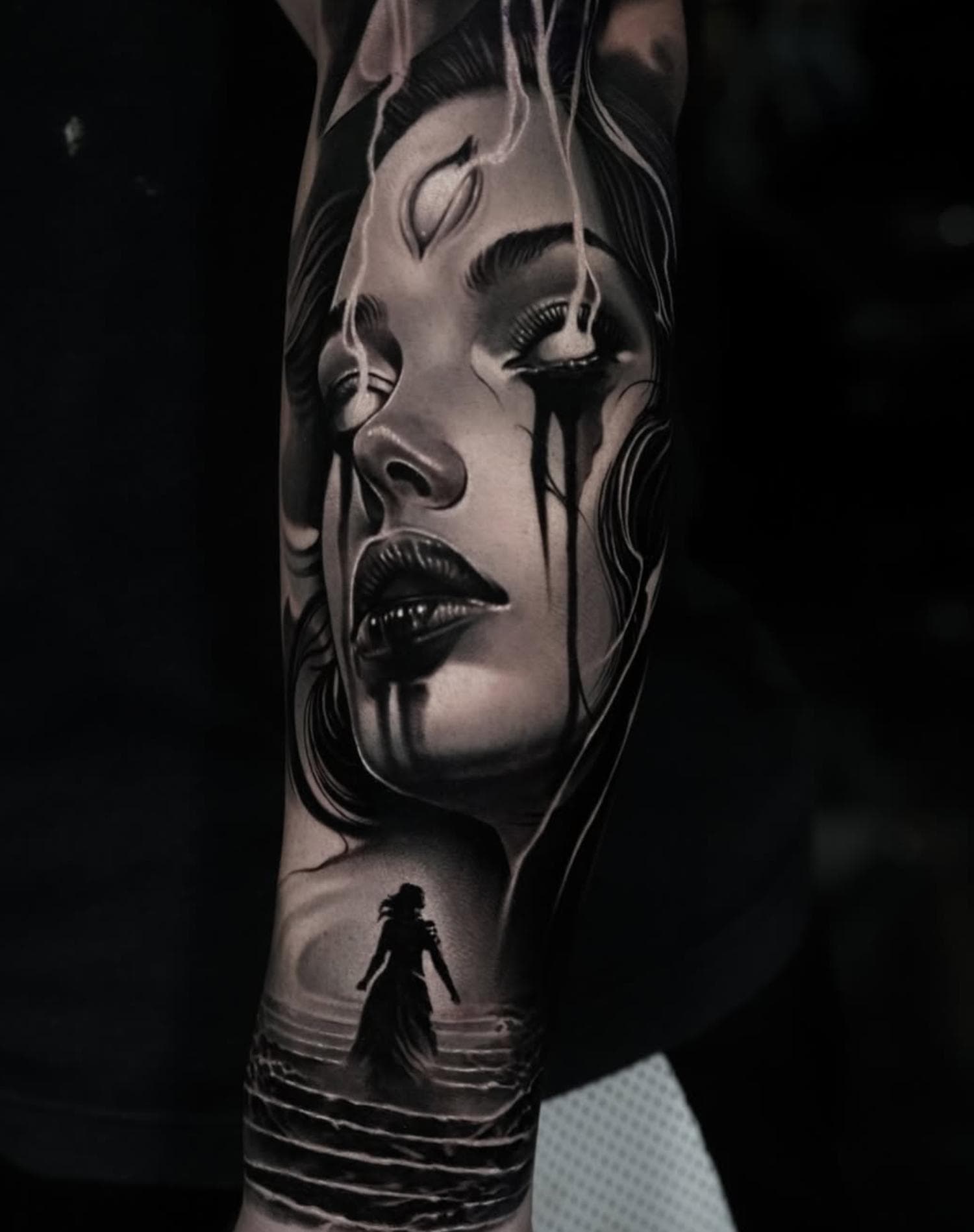
Black & Grey Realism: What It Is (and Why Large-Scale Matters)
Black and grey realism is built on the same principles that make a photograph feel “real”: value control (lights to darks), believable texture, and clean composition. In tattooing, those fundamentals get harder—not easier—when the piece gets bigger. A forearm can showcase detail, but a sleeve, torso panel, or full leg demands long-range readability, consistent lighting across multiple subjects, and a plan for how the tattoo will age over years of sun, movement, and skin changes.
The Evolution of Realism Styles: From Contrast-Heavy to Cinematic, Story-Driven Work
Realism has evolved from early black-and-grey approaches that leaned heavily on bold contrast to ensure longevity, into modern techniques that blend smooth gradients, controlled texture, and compositional “negative space” for depth. Today’s most collectible large-scale realism often looks cinematic: it’s less about copying a single image and more about directing a scene—where your eye goes first, where it rests second, and how multiple elements live together without turning into visual noise.
What to look for in 2026-era realism
The best large-scale black & grey realism in 2026 is recognizable for: (1) stable midtones (not washed out), (2) intentional contrast placed where it matters (not everywhere), (3) texture that reads from both close and far, and (4) cohesive lighting across the full composition—especially when combining portrait elements, landscapes, and objects.
Portfolio Breakdown: Realism That Proves Technical Range (Omega + Vic Vivid)
When you’re investing in a large-scale black & grey realism tattoo, you’re not just hiring someone who can shade—you’re hiring someone who can design for the body. The pieces below show different realism “problem sets”: fur, skin, scenery, cinematic storytelling, and large-format placement.
Omega: Black & Grey realism with impact, storytelling, and big placement confidence
Omega’s “Realistic Lion and Landscape Forearm Tattoo” is a clear example of why black & grey realism remains the gold standard for dramatic imagery. The caption highlights a “highly detailed black and grey tattoo of a lion and landscape,” which is exactly the kind of pairing that tests an artist’s control: fur texture, natural scenery, and depth all need different value transitions—yet still must share one believable light source.
If you’re considering larger territory, Omega’s “Viking Warrior Full Leg Sleeve Tattoo” shows true scale management. A “vibrant and realistic depiction of a Viking warrior covering the entire leg” signals more than realism skill—it signals endurance planning, composition across multiple muscle groups, and the ability to keep the main subject readable from every angle of the limb.
For clients who want cinematic realism, Omega’s “Clown Villain Upper Arm Realism Tattoo” and “Realistic Movie Scene Upper Arm Tattoo” demonstrate scene-based composition. The captions describe vivid, realistic character depictions on the upper arm—work that typically demands strong focal hierarchy so the face/character reads instantly, while background elements support the story instead of competing with it.
Vic Vivid: Black & grey portrait precision (plus realism range that matters for sleeves)
Large-scale black & grey realism often includes portrait elements—pets, people, or character faces. Vic Vivid’s “Realistic Dog Portrait Forearm Tattoo” is specifically described as a “detailed black and grey realistic tattoo of a dog's face,” which is exactly the kind of subject that exposes weaknesses fast. In portrait realism, the artist must control soft transitions (muzzle, cheeks), crisp focal points (eyes), and believable texture (fur) without overworking the skin.
Even when planning black & grey, it’s valuable to choose an artist with realism range across subject matter and placements. Vic Vivid’s large “Realistic Raven and Flowers Torso Tattoo,” described as a “large, vibrant tattoo of a realistic raven surrounded by orange flowers,” shows comfort with large-format flow on the torso—a notoriously challenging area due to breathing motion, curvature, and the need for composition that looks correct from multiple angles.
How to Choose the Right Artist for a Large-Scale Black & Grey Realism Tattoo
1) Look for “multi-texture realism,” not just one good subject
A large piece rarely stays simple. The best indicator of readiness is an artist who can convincingly tattoo multiple textures in one composition—fur + landscape (Omega’s lion and landscape), armor/character storytelling at scale (Omega’s Viking full leg sleeve), or portrait realism that holds up in black & grey (Vic Vivid’s dog portrait).
2) Evaluate composition on the body (not just the stencil or a cropped photo)
Large realism succeeds when it’s designed for anatomy: the focal point lands where the body naturally presents it, and secondary elements wrap with intention. Full leg work, like Omega’s Viking warrior leg sleeve, is a strong sign an artist can build flow from thigh to calf while preserving readability.
3) Ask about longevity: contrast strategy and negative space
High-end black & grey realism ages best when the artist uses contrast as a structural tool—not as a filter. You want clear dark anchors, protected highlights, and enough open breathing room that details don’t blur together over time.
Planning a Large-Scale Piece: Placement, Sessions, and Smart Commitments
Placement: pick a canvas that matches the story
Forearm realism (like Omega’s lion and landscape, or Vic Vivid’s dog portrait) is ideal for a strong focal subject with supporting elements that can wrap. Upper arm realism is excellent for cinematic character work—Omega’s movie scene and clown villain pieces live where the curvature can frame a face or scene. If your vision is truly epic—like a warrior concept—full leg sleeves (Omega’s Viking) give you the space to build narrative and scale.
Session count: expect planning phases, not just tattoo time
Large-scale black & grey realism is typically a multi-session project. Most clients should plan for: (1) a design consultation and reference review, (2) foundational passes to set composition and major values, (3) refinement sessions for texture and focal detail, and (4) final contrast balancing so the piece reads cleanly from a distance.
How to prepare so your realism heals clean and sharp
Prioritize sleep, hydration, and consistent aftercare—especially on high-movement areas like legs and forearms. Large realism also benefits from smart scheduling: spacing sessions allows the skin to fully recover so fine textures (fur, feathers, facial gradients) heal crisp instead of patchy.
Final Take: The Right Artist Makes Large-Scale Realism Look Effortless
Large-scale black & grey realism isn’t just about detail—it’s about design maturity, value control, and long-term readability. Whether you’re drawn to Omega’s high-impact realism (from the lion-and-landscape forearm to the Viking full leg sleeve) or Vic Vivid’s black & grey portrait precision (as seen in the dog portrait forearm), the best next step is a consultation focused on placement, scope, and a realistic session plan.
Ready to start a large-scale black & grey realism project in Las Vegas? Book a consultation and bring your references, placement goals, and the story you want the tattoo to tell—we’ll help you map it into a cohesive, collectible piece.